It’s three in the afternoon, your eyes feel heavy, and the list of things you meant to do for your health is exactly where you left it. Maybe it’s a steadier bedtime, a short walk, or simply eating lunch away from your screen. Putting these things off rarely means you don’t care. More often, the plan felt too big for the week you’re having. So which small habits are worth starting now, and how do you begin without turning your life upside down?
Why “Tomorrow” Keeps Winning Over Healthy Habits
Most habits get postponed for a plain reason: we picture the full, polished version. A perfect morning with a workout, a green smoothie, and journaling sounds lovely, and also exhausting. When the picture is that large, tomorrow feels like a safer day to begin.
Here’s a gentler way to look at it. A habit worth starting is one you could still do on your worst day. Ten minutes outside counts. One slow glass of water counts. A single line in a notebook counts. Small things get done, and things that get done tend to be repeated.
You don’t need to fix everything at once, and you don’t need to feel behind. Pick the habit below that sounds least like work, and begin there.
Start With Morning Light and a Steady Wake Time

Morning is a good place to begin because it sets the tone for a lot of what follows. Two small things seem to help many people: getting some daylight soon after waking, and getting up at roughly the same time each day.
Try this for a week:
- Step outside, or stand by a window, for a few minutes after you wake up.
- Leave your phone in another room for those minutes, if you can.
- Keep your wake-up time within about an hour of itself, weekends included, as far as real life allows.
Morning light is linked with how our body clock keeps time, which is one reason people often sleep more steadily when their days have a clear start. It isn’t a cure for anything, and the research is more complicated than a headline makes it sound. Still, it costs nothing and takes very little effort.
If a full routine feels like too much, set aside the workout and the big breakfast for now. Daylight and a steady wake time are enough to begin.
Take a Five-Minute Pause Before the Afternoon Slump Wins
Many of us push through the day without stopping once. Then mid-afternoon arrives, and we reach for another coffee or another scroll.
A short break can change that. Nothing fancy is needed:
- Look out a window, or at something far away, instead of at your screen.
- Run cool water over your hands.
- Take five slow breaths, letting each out-breath be a little longer than the in-breath.
- Stand up and stretch your shoulders and back.
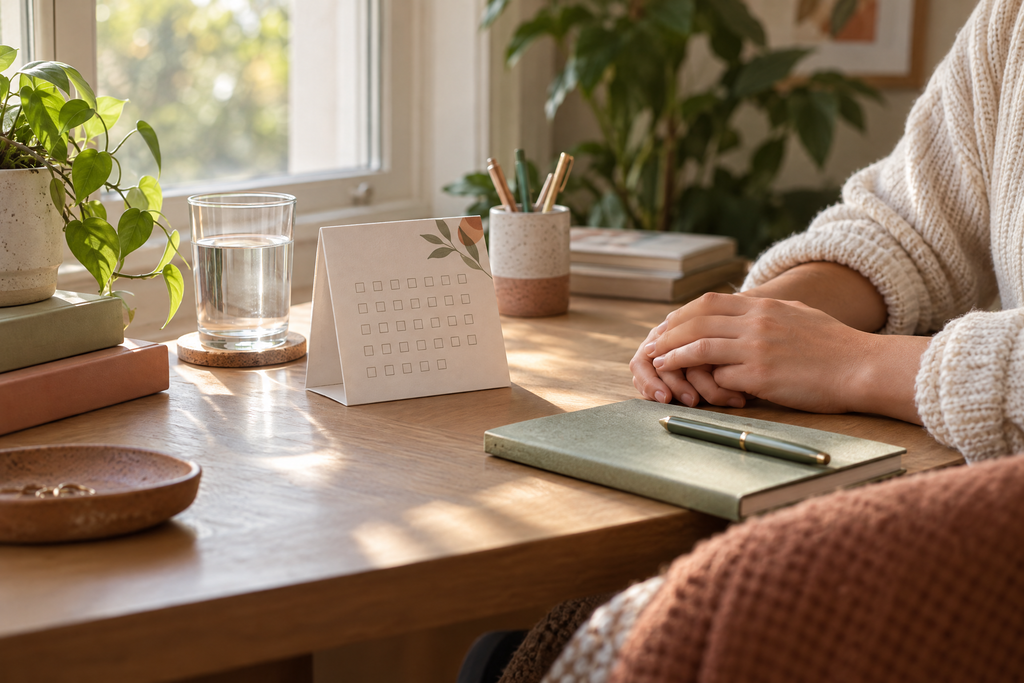
Think of these as small resets rather than rewards you have to earn. Put one on your calendar around midday, even if it lasts only five minutes, and notice how your afternoon feels. If a break gets skipped, that’s fine. Try again the next day.
Why One Habit at a Time Beats a Big Fresh Start
Putting a habit off is one problem. Starting too many at once is the opposite problem, and it’s just as common.
Here’s what happened to me once. In a single week I tried morning light, a new eating pattern, breaks, a bedtime, and cutting back on my phone. By Thursday I was snappy and exhausted, and by Sunday I’d dropped all five. The lesson was simple: change one thing at a time.
That’s a useful rule for any routine. Choose one habit, keep it small, and leave the others for later. A calendar with no room in it can’t hold five new commitments, but it can usually hold one.
Leave a Little Room When You Eat
Eating is another area people postpone because they assume it needs a whole new diet. It doesn’t. You can begin by slowing down.
- Sit down for at least one meal a day, away from your screen.
- Put your fork down between a few of your bites.
- Halfway through, pause and ask yourself how full you feel.
- Stop when you’re comfortably satisfied, even if there’s food left.
Fullness signals seem to take a little while to reach us, which is one common reason slowing down helps. Leaving a little room on the plate isn’t about restriction. It’s about noticing. If you have a history of disordered eating or a medical condition that affects how you eat, please check with your doctor first, and skip anything here that doesn’t feel safe for you.
Test One Habit for Thirty Days and Write It Down
Three days, or even one good week, isn’t enough to know whether a habit suits you. Thirty days gives a fairer picture. Choose one habit from this list and keep a simple log. Each evening, jot down a line: what you tried, how your energy felt (low, medium, or high), and what got in the way.
When the thirty days are up, ask two questions. Do I have more energy? Do I want to keep going? Sometimes the answer is no, and that’s a real answer too.
If you like having everything on paper in one place, with a pen and a quiet few minutes, The Rhythm Is Waiting is a short guide with five printable thirty-day trackers you can use exactly this way. It’s there if you want it. A plain notebook works just as well.
Give Your Evenings a Softer Landing
Sleep is the habit most of us promise to fix once things calm down. Your evening can help you get there, even on a busy week.
- Choose a bedtime you can actually keep, and protect it most nights.
- Dim the lights and put your phone out of reach for a little while before bed.
- Add one calm thing: a page of a book, a gentle stretch, or a warm cup of tea.
- If you’re lying awake, get up quietly rather than watching the clock.
A steady bedtime and a steady wake time work well as a pair. Neither needs to be perfect. If sleep has been a real struggle for a while, I’d gently suggest talking with a doctor rather than trying to solve it alone.
Pause Before You Reach for Your Phone or a Snack
There’s a small gap between an urge and what we do about it. Most of the time we skip right through it. A snack appears, a screen lights up, or a sharp reply leaves our mouth before we’ve decided anything.
You can practice widening that gap. When an urge shows up, take three slow breaths and ask yourself, “What do I actually need right now?” Sometimes the answer is food. Sometimes it’s water, a stretch, or a short break. Sometimes you’ll still want the snack, and that’s fine. The point isn’t to win a fight with yourself. It’s to make the choice yours.
Know When a Habit Needs Your Doctor’s Voice
Small habits are not a replacement for medical care. If you’re pregnant, breastfeeding, under 18, living with diabetes or low blood pressure, have a history of an eating disorder, or take prescription medication, please talk with your doctor before changing how or when you eat. The same goes for any health concern that feels bigger than a habit can handle. You can read more on the Hearth Habits disclaimer page. Nothing here replaces medical advice, and if something feels off, a professional you trust is the right person to ask.
Questions People Ask About Starting Healthy Habits
How long does it take to notice a difference?
It varies from person to person, and no honest guide can promise a timeline. Thirty days is a fair stretch for judging whether a habit is working for you. Pay attention to simple things like how you feel in the afternoon and how easy it is to fall asleep, and keep your expectations gentle.
What should I do if I miss a day?
Pick it back up the next day, with no catching up and no punishment. A missed day is just information. It may tell you the habit is too big, or that your schedule needs a bit more room. Make the habit smaller if you need to.
Which habit should I start first?
Start with whichever one sounds easiest. For many people that’s a few minutes of daylight after waking, or a five-minute break in the afternoon. Both are small enough to keep, and both fit into a busy day without much planning.
Your Next Small Step
You don’t have to start everything this week. Choose one habit from this post, make it as small as you can, and do it tomorrow. Stand by a window with your morning drink, take five slow breaths at your desk, or set your fork down halfway through lunch. That’s it.
When you notice it going well, you can add another. If you don’t, make it smaller. The habits worth keeping are the ones that feel kind enough to come back to.